
PWA Developers That Build Fast, App-Like Web Apps
Scorchsoft provides Progressive Web App development for businesses that need fast, installable, app-like web experiences. We build PWAs, portals and SaaS platforms that work across devices and are easier to launch, update and maintain.

Building for teams across healthcare, logistics, motorsport and manufacturing
Trusted by 220+ organisations





How we work · VelocitySprint®
Bespoke software, without the usual risks
Software projects usually go wrong in three ways: the bill keeps growing, nobody can see progress, and you're locked in. VelocitySprint® is designed to stop all three.
Learn More- MonSprint starts
- TueDaily update
- WedDaily update
- ThuDaily update
- FriYour call: continue · change · stop
Daily progress through the week. Every Friday is your call: continue, change or stop.
Pay for output, not hours
Each deliverable is scoped and priced in OutputUnit® units, a unit of finished work rather than time spent. The bill doesn't grow because a task took longer.
See progress every day
Short sprints with daily updates and working software early, so you judge real screens rather than status reports.
Escape Hatch Friday™
You're never locked into a sprint that stopped making sense on Tuesday. Change direction or stop at the end of any week.
What will it cost? Bespoke builds under £7.5k are rare. Every sprint is priced before it starts and payments are phased with delivery, so you agree the cost of each step before it begins.
Get a free estimateRapid Results with PWA Development Sprints
Our VelocitySprint® process helps you move from PWA idea to working product quickly, with clear scope, fast feedback, and practical delivery milestones.
PWA Discovery & Scoping
We define your users, workflows, device requirements, offline needs, installability goals, integrations and must-have MVP features so you know exactly what should be built first.
Sprint-Based PWA Builds
Our UK developers work in focused sprints to build fast, responsive Progressive Web Apps that can support mobile, tablet and desktop users through one maintainable codebase.
Launch, Test & Improve
Get your PWA live quickly, test it with real users, monitor performance across devices, then improve the product based on feedback, usage data and business priorities.
Recent app and web platform work
Recent published Scorchsoft projects showing the range from mobile assessment apps to AI platforms and secure browser-based member systems.
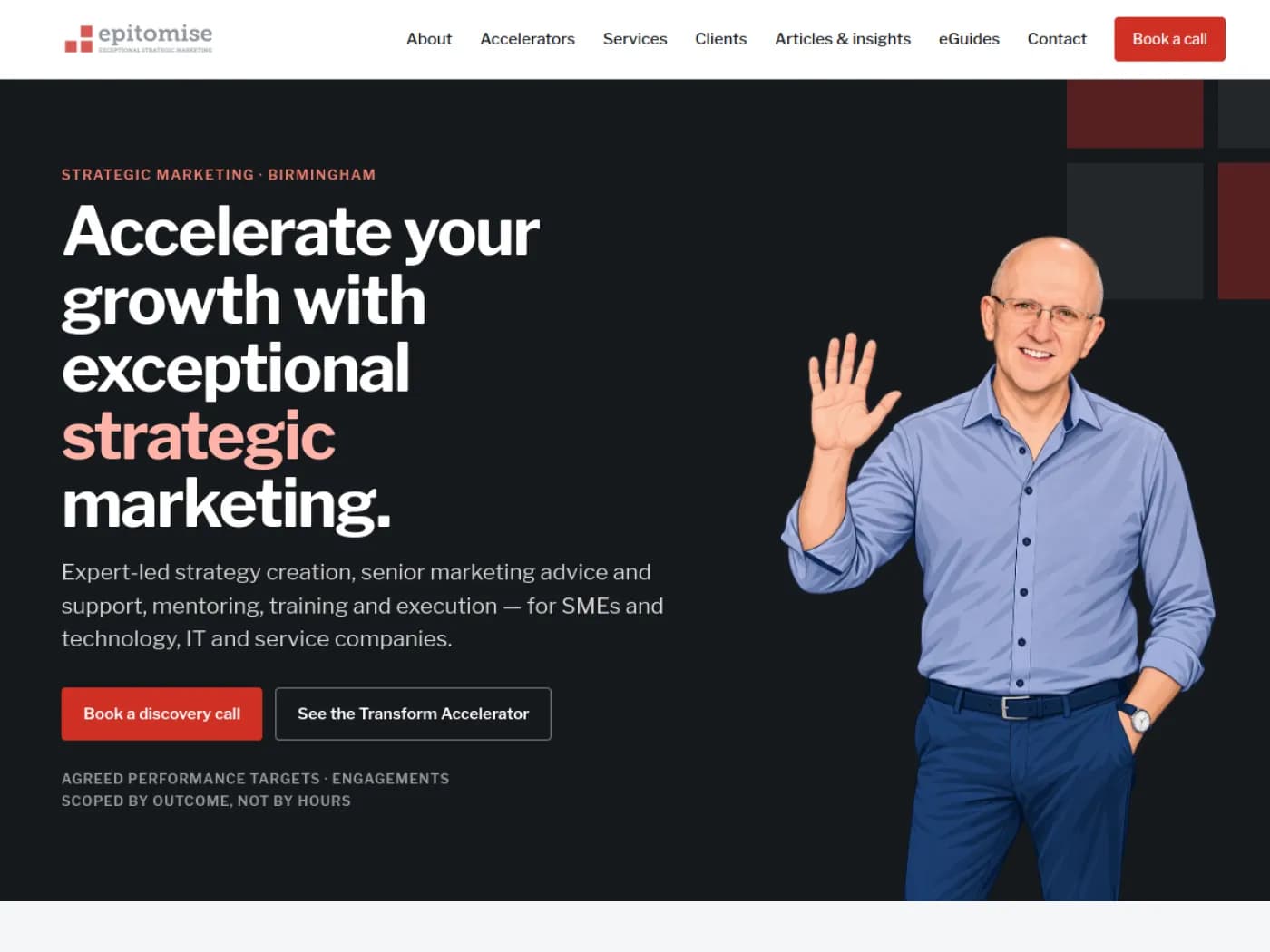
Epitomise Website
A modern strategic marketing website built around services, proof, guides, insights and conversion journeys.
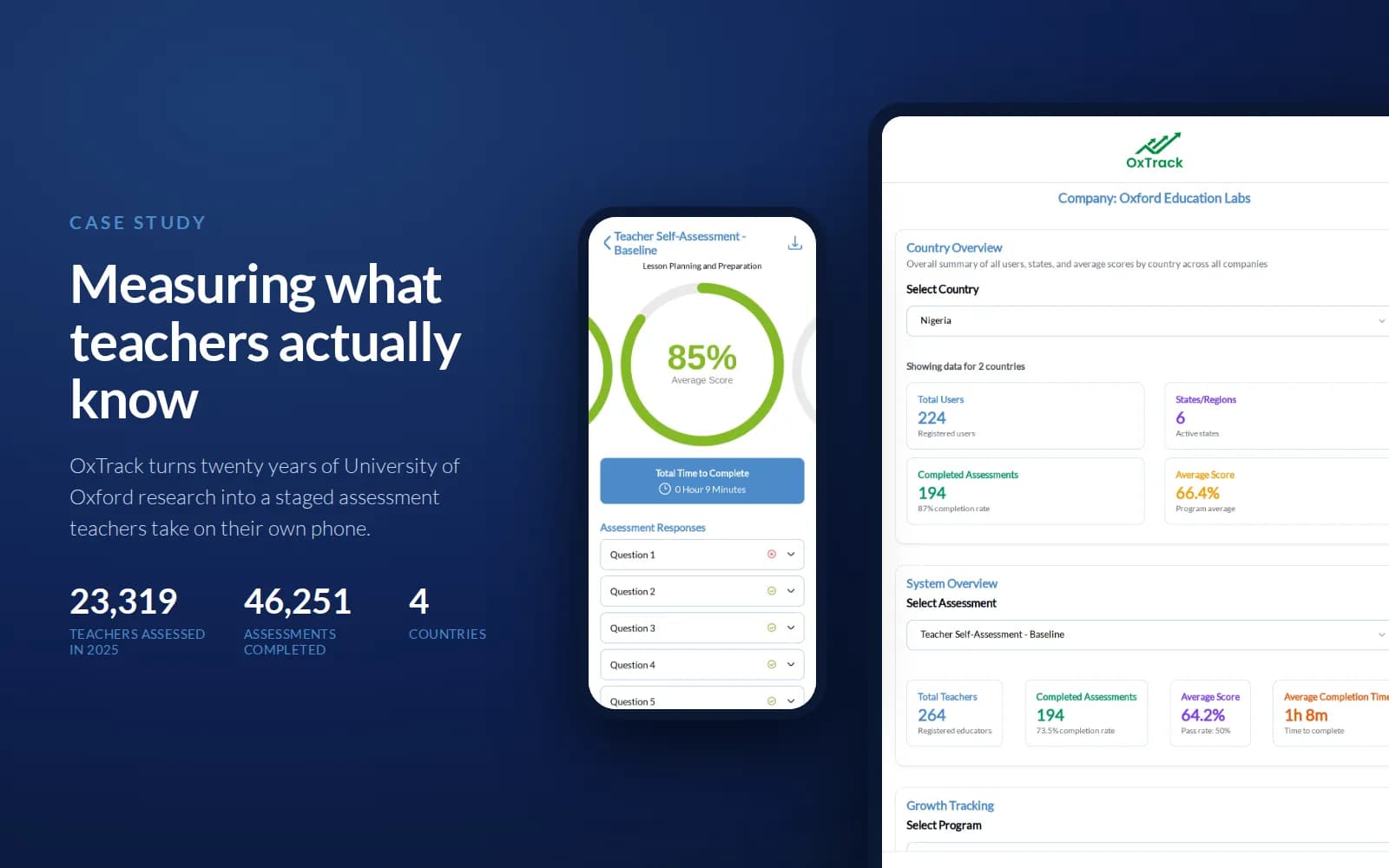
OxTrack Teacher Assessment App
A teacher assessment app with a web admin platform, automatic scoring, offline-tolerant workflows and infrastructure built for national rollout.
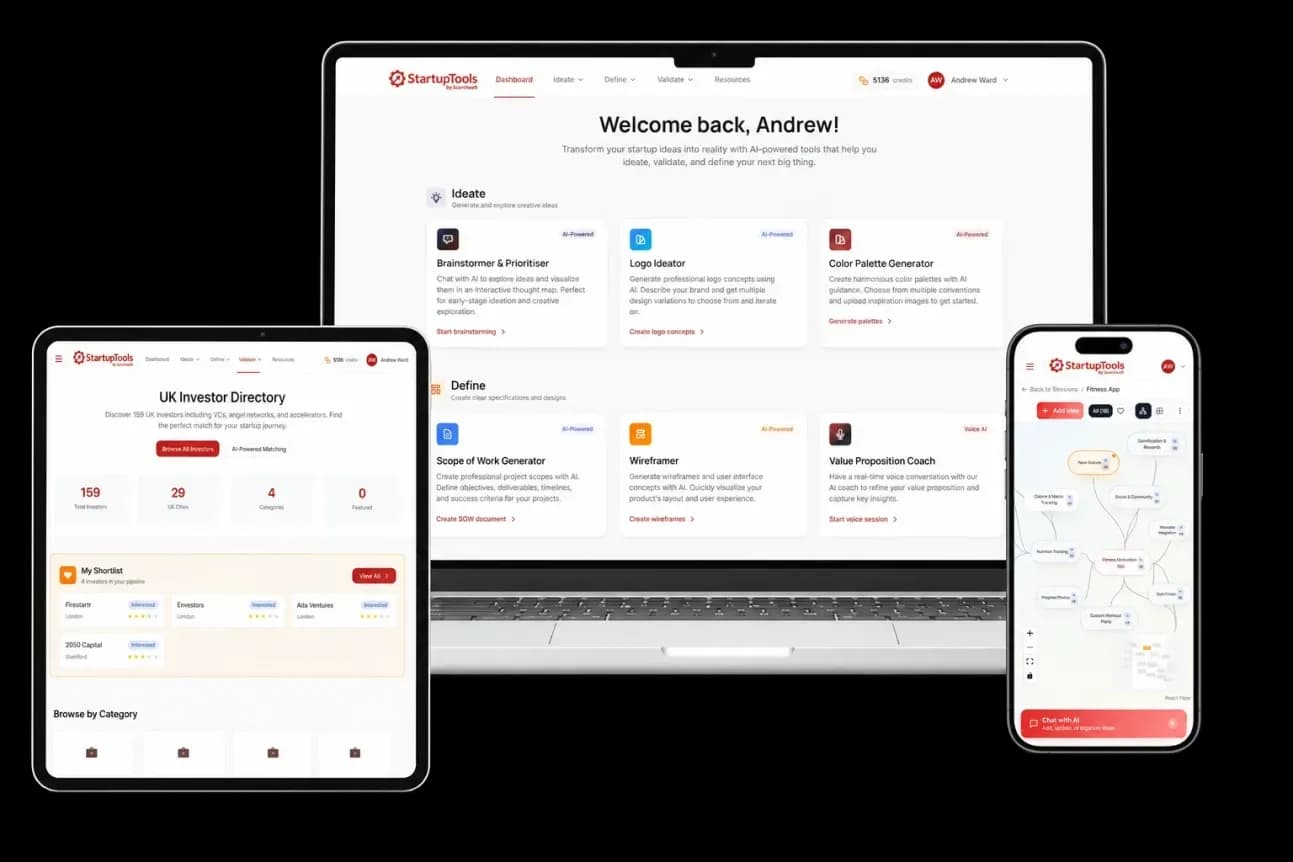
StartupTools AI Platform
Scorchsoft's AI platform for founders and product teams, combining planning, branding, wireframing, investor matching and real-time AI coaching.
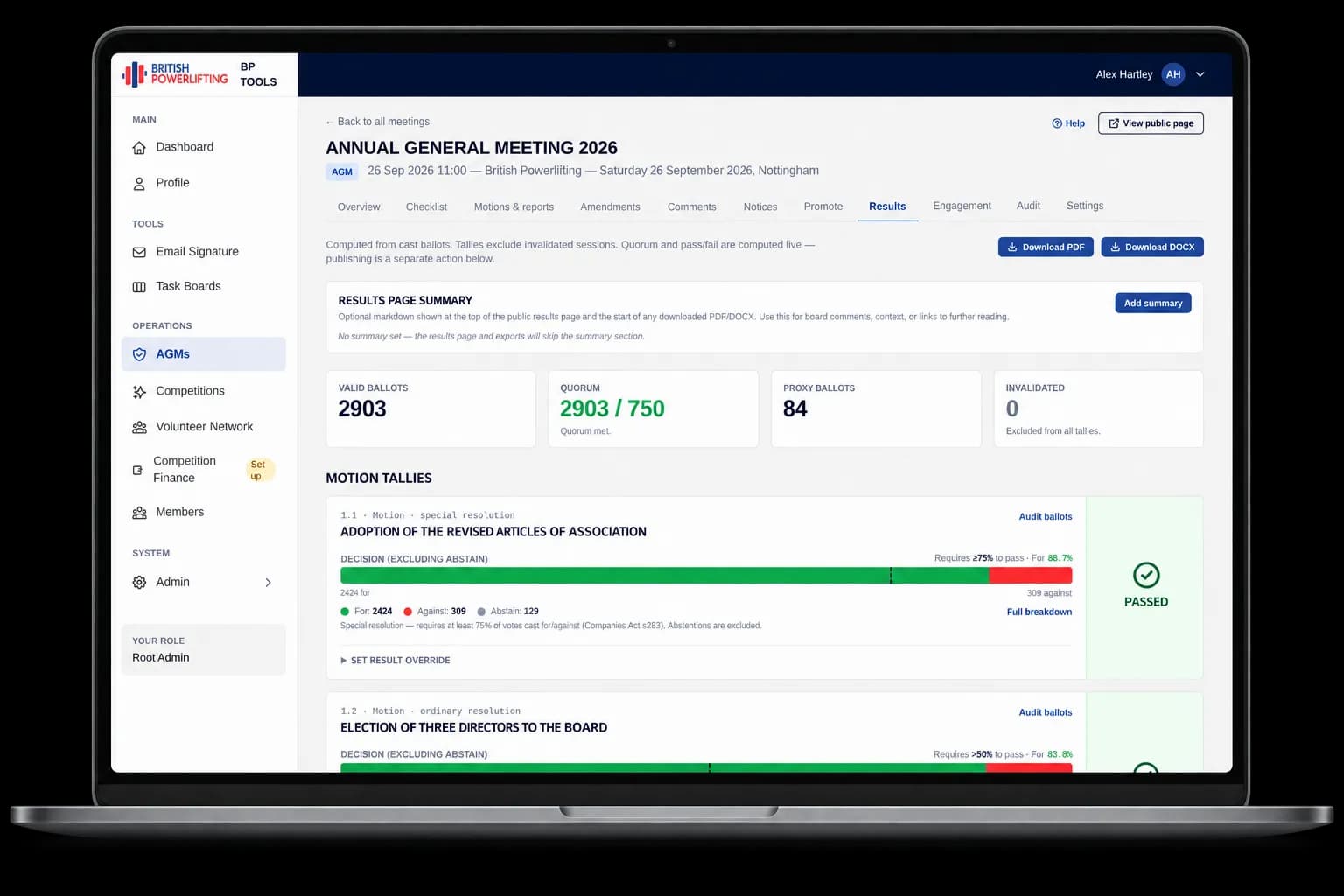
Online AGM & Member Voting
A secure browser-based member voting system with magic-link ballots, proxy voting, live quorum and a complete audit trail.
Progressive Web App Development Agency in Birmingham
If you are exploring a Progressive Web App, online portal, SaaS product or mobile-friendly web platform, tell us what you want users to achieve and we will help you shape the right approach, define the feature set, and give you a clear indication of cost and next steps.
Browse our capabilities, see our portfolio, or get a free quote.
Explore our wider web app development services if your project also includes SaaS, portals or complex browser-based software.

Got an App Idea? Let's Build It Together
Tell us what you want your Progressive Web App to achieve and we will come back with an approach and an indication of cost.
In our clients' words
On time, on budget, and sold before it was finished
“It was delivered on time - early in fact - and on budget. Highly recommend.”
 Rebecca PalserDragonfly Intelligence
“We were able to sell the product for use by our first customer before the product was finished.”
Since launching, they’ve secured a major television network as a client.
Aimee SpinksMD, ImageApprovals.com “They have been accurate with timelines and budget, delivering a solid product.”
A web portal for monitoring patients remotely while they use a novel at-home medical device.
 Daniel GreenSensTrain
Where to start
Where are you starting from?
- Find & prioritise
“We need to improve, but don’t know what to build”
We find the friction in how your team works, pick the first improvement worth making and put it into controlled use over 90 days.
- Build & change
“We know what we need built”
Apps, web portals, integrations and automation, delivered in VelocitySprint®.
- Operate & improve
“Our software needs rescuing or support”
Understand the risks in an existing app, rescue a stalled build or arrange support for live software. The free App Risk Check below can help you identify what to verify first.
- Plan & validate
“We have an idea and need to know if it’s worth it”
Validate, scope or prototype it before you commit a full budget, then launch a first version fast.
Not ready to talk yet?
Find the next question worth answering
Choose a free assessment for your business, existing app or startup. If you already know what help you need, you can enquire directly.
- AI Opportunity ScoreWhere could AI save effort or create value?
- Free App Risk CheckWhat needs checking before you rely on an existing app?
- AI Readiness ScoreAre the foundations in place for an AI pilot?
- Startup Readiness ScoreWhat should you validate before funding a build?
Sample report · example values
- Opportunity Hotspots
- Growth Upside
- Data & Knowledge Fuel
- Build-vs-Buy Fit
- Readiness to Act
An opportunity to explore: Reduce repeated document handling before adding more tools.
- A score and a breakdown by area
- Practical actions based on your answers
- A report emailed to you to discuss with your team
Frequently Asked PWA Development Questions
Here are answers to common questions we receive about Progressive Web App development, PWA features, costs, integrations and project delivery.
PWA development is the process of building a Progressive Web App, which is a web application designed to feel more like a mobile or desktop app. A PWA can run through a browser, work across different devices, load quickly, and support app-like features such as home-screen installation, offline access and push notifications where supported.
A PWA developer designs and builds Progressive Web Apps using modern web technologies. This usually includes responsive interface development, backend development, API integrations, performance optimisation, offline functionality, caching, security, user authentication and deployment. The goal is to create a fast, reliable app-like experience without needing separate native apps for every platform.
Yes. Scorchsoft builds custom Progressive Web Apps for businesses, start-ups and established organisations. We can help you define the right product approach, design the user experience, build the PWA, connect it with your existing systems, launch it, and support it after release.
A PWA can be better than a native mobile app when you want a fast, cross-platform, app-like experience without building separate iOS and Android apps. Native apps may still be better when you need deep device features, complex background processing or App Store distribution as a core part of your strategy. We can help you compare both options and choose the right route.
Many types of apps can be built as PWAs, including customer portals, staff workflow tools, SaaS platforms, booking systems, training apps, dashboards, reporting tools, e-commerce systems, field service apps and mobile-first business applications. PWAs are especially useful when users need access across phones, tablets and desktops.
Yes. A Progressive Web App can often be installed on a user's home screen, giving it an app-like presence on the device. The exact installation experience depends on the browser, operating system and device being used, but the aim is to make the app quick and convenient to access without forcing users through an app store.
Yes, a PWA can be designed to support offline or limited-connectivity usage. This can include caching key screens, storing data temporarily, allowing users to continue certain actions offline, and syncing information when the connection returns. The best offline approach depends on the type of app, the data involved and how users need to work.
Yes, PWAs can support push notifications in many modern browsers and devices, although support varies by platform. Push notifications can be useful for reminders, workflow updates, customer alerts, booking notifications, messages and other time-sensitive events. We can advise what is realistic based on your target users and devices.
The cost of PWA development depends on the scope, number of user types, design complexity, offline requirements, integrations, backend functionality, security needs and ongoing support requirements. A focused MVP or prototype will usually cost less than a large multi-role platform with complex workflows and multiple system integrations.
The timeline for building a PWA depends on the complexity of the product. A focused MVP can often be planned and built faster than a full-scale platform, especially when the first version concentrates on the most important user journeys. We usually recommend starting with the core workflow, launching something useful, then improving it based on real feedback.
Yes. A prototype can be a sensible first step before full PWA development. Depending on your goals, this might be a clickable prototype to test the user experience, a technical proof of concept to confirm feasibility, or a small working MVP with the core features needed to validate the idea.
In some cases, yes. An existing website or web app can sometimes be upgraded with PWA features such as improved mobile responsiveness, caching, offline support, installability and performance improvements. However, if the existing system is outdated or poorly structured, it may be better to rebuild key parts properly rather than bolt PWA features onto weak foundations.
Yes. We regularly build web apps and portals that connect with CRMs, ERPs, payment systems, booking tools, databases, websites, APIs, legacy systems and third-party platforms. For many PWA projects, integrations are essential because the app needs to display, update or process live business data.
Yes. PWAs can be a strong fit for customer portals, supplier portals, staff portals and operational dashboards because they work through the browser while still offering a more app-like user experience. They can help users complete tasks, access information, upload data, receive notifications and manage workflows across different devices.
Security should be designed into a PWA from the start. We can implement secure authentication, role-based permissions, encrypted connections, data validation, API controls, audit trails and sensible hosting practices. The right security approach depends on the data being handled, the users involved and the business risks of the app.
Scorchsoft combines PWA development capability with over fifteen years of broader software delivery experience. That means we do not just think about the front-end app experience; we also consider the user journey, business process, backend architecture, integrations, performance, security, scalability and long-term maintainability.
The best first step is to tell us what you want the PWA to achieve, who will use it, what devices they will use, what systems it may need to connect with, and what features are essential for the first version. We can then suggest a sensible route towards planning, prototyping or full development.
Next step
Tell us what you want to build
An idea or a problem is enough; no specification needed. We'll come back with our thoughts, a realistic plan and a rough cost estimate.
We aim to reply within one working day a free 15-minute call a plan and a ballpark.

Andrew Ward
Founder & Managing Director, Scorchsoft