
AI agents for business: what they cost and where they pay back
For decision-makers being pitched agents: what an agent is in business terms, whether you need one at all, where they genuinely pay back today, how to size the prize before building, and how the cost is actually structured.
- Author
- Andrew Ward
- Managing Director
- Last reviewed
- Reading time
- 8 min

In this guide
In summary
An AI agent is a software system that takes a goal and completes it — deciding the steps, using tools and data, and taking actions — rather than only replying to a prompt. Agents pay back where a multi-step job is repetitive, high-volume and currently done by a person moving between systems. This guide covers whether you need an agent or something simpler, how to size the return before committing, how the cost is structured, and what has to be true for an agent to be safe to rely on.
Key takeaways
- An agent completes a multi-step job; a chatbot answers a question. If your problem is one step, you do not need an agent.
- Agents pay back on jobs that are multi-step, high-volume and cross several systems — the work a person currently does by tabbing between screens.
- Size the prize from your own figures before building: volume, minutes per case, loaded hourly cost, and the realistic share an agent can take.
- Cost has three parts people forget to separate: scoping, the build, and per-transaction model usage that continues for as long as it runs.
- In our projects agents are built in fixed two-week sprints, and the recommended first step is a short, fixed-price scoping engagement starting around £1,500.
What an AI agent is, in business terms
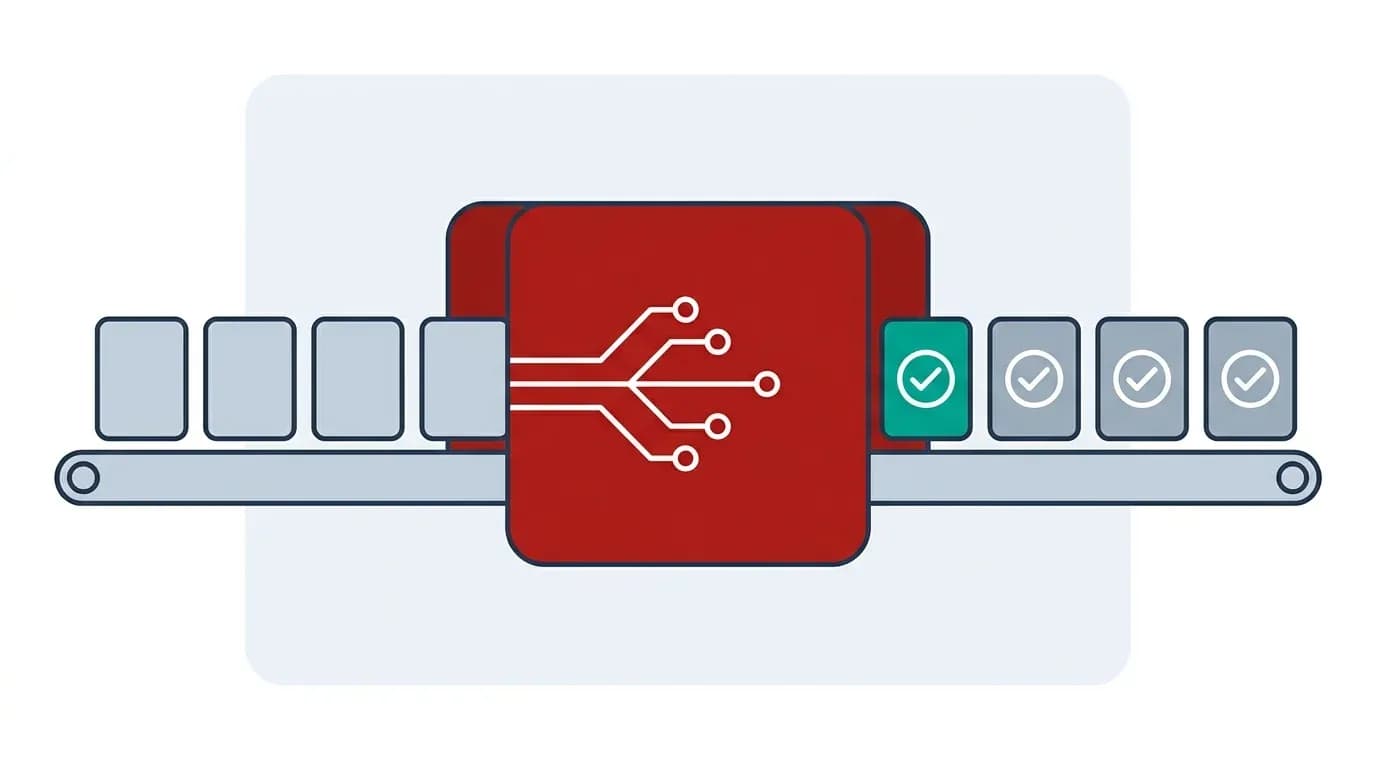
An AI agent is software that takes a goal and completes it — deciding the steps, using tools and data, and taking actions — rather than just replying to a prompt. The useful mental model is a digital worker that handles a task from start to finish under rules you set, not a smarter search box.
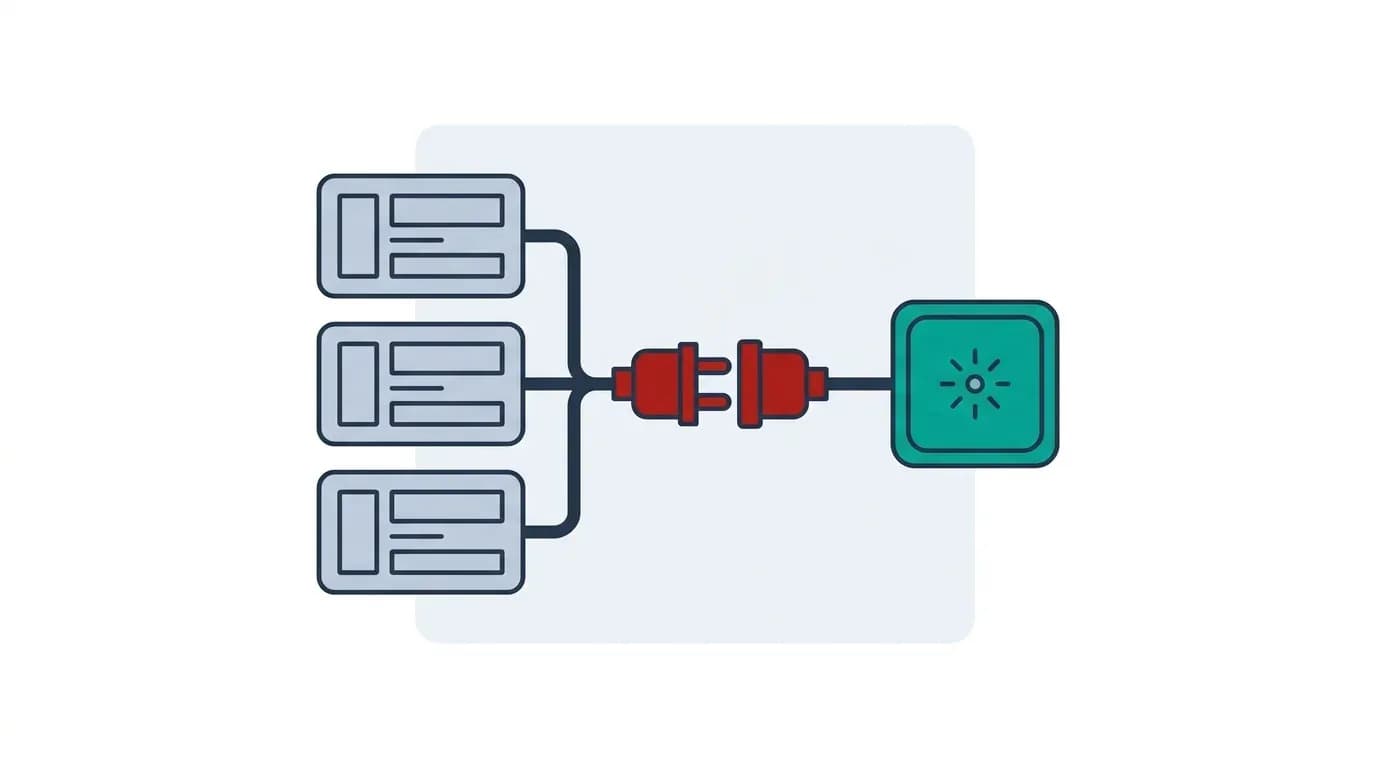
The distinction from a chatbot is the doing. A chatbot answers questions; an agent looks things up, makes decisions, calls your systems and finishes a multi-step job. That is also why the engineering effort sits somewhere different from where people expect: the difficulty is not the conversation, it is the integration and the governance that let something act on your behalf safely.
In our work agents are built as bespoke systems wired into the tools a business already runs, and deployed on our own AI Agent Engine framework rather than assembled from scratch each time.
Do you actually need an agent?
This is the question most agent pitches skip, and getting it wrong is the most expensive mistake available. Work down this list and stop at the first match — the options get more expensive as you go.
- One step, fully deterministic — use rules-based automation. Cheaper, faster and more reliable than any model.
- One step, needing language or judgement — use an AI automation. A single model call, with no decision-making required.
- Several steps in a fixed order — use an agentic workflow. AI inside a sequence you define and control.
- Several steps whose order depends on what it finds — use an AI agent. This is the only case where deciding the steps is itself the job.
The examples make it concrete. "If the total is under £500 and the supplier is approved, post it" is row one. "Classify this email and draft a reply" is row two. "Read the form, check the CRM, create the record, send the confirmation" is row three. "Investigate this query, where what you do next depends on what the account shows" is row four.
If you land in the first two, an agent is over-engineering, and you should be suspicious of anyone selling you one. Our guide on automating processes with AI covers those cheaper cases properly.
Where agents pay back today
The pattern is consistent: a multi-step job, repeated often, currently done by a person moving between several systems. The cost being removed is not just the thinking — it is the tabbing, looking up, copying and waiting.
Jobs we see genuinely repay the effort:
- Customer support handling, where the agent reads the request, finds the account and order history, resolves the straightforward cases and escalates the rest with a summary.
- Sales qualification and follow-up, enriching an enquiry, scoring it, and chasing at the right interval without anyone remembering to.
- Research and document summarising, where the input arrives in varying formats and a person currently reads everything.
- Operations monitoring, watching for a condition and taking a defined action — the jobs where the cost is somebody remembering to check.
What these share is that the sequence varies by case. If the sequence never varies, a workflow is cheaper and more predictable, and you should build that instead.
Size the prize before you build
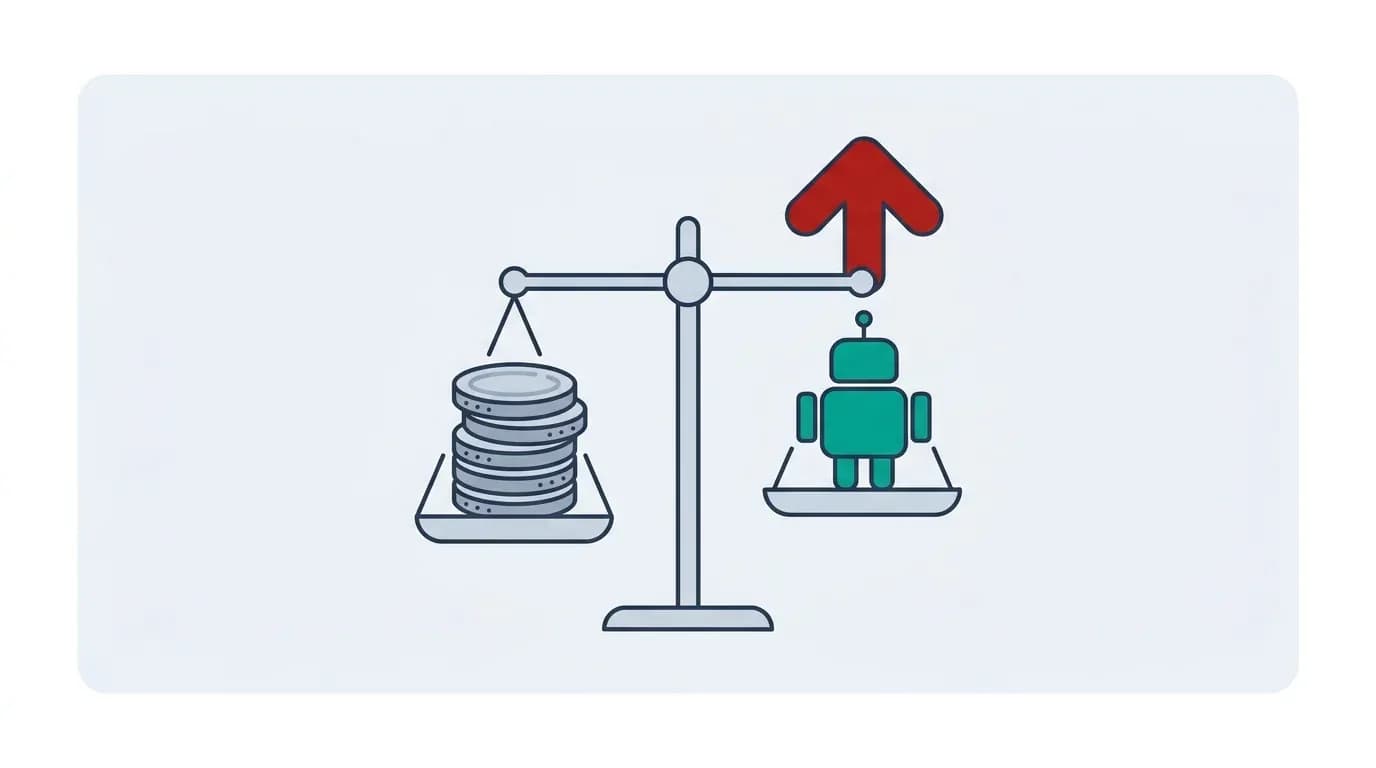
Do the arithmetic with your own numbers. A vendor's benchmark is a marketing figure, ours included, and no two businesses have the same cost per case.
Take one job type. Count how many times a week it happens, the average minutes a person spends on it end to end, and multiply by a loaded hourly cost — salary plus employer's National Insurance, pension, tooling and management overhead. Annualise it. That is the ceiling.
Then discount to something honest. Agents rarely take a whole job type: they take the routine majority and escalate the rest, so apply a realistic share — and that share is something a scoping exercise can estimate from your actual case mix rather than guess. Add back the human review time that remains, because at anything short of full autonomy a person is still in the loop.
Finally, add the non-labour value, which is often larger than the time saved: faster response times winning deals, fewer errors, consistent handling at 2am, and the capacity to absorb a volume spike without hiring. Also note honestly whether the freed hours will genuinely be reallocated. If not, the saving is theoretical.
What an agent costs
We do not publish a price band for an agent, because the number depends almost entirely on how many systems it touches and how much autonomy it needs — and a band wide enough to be true would be useless to you. What we can be precise about is the structure, which has three parts.
Scoping. The recommended first step is a short, fixed-price engagement that confirms whether an agent is worth building and what it will cost. On our AI Opportunity Planning engagements a focused scoping engagement starts around £1,500, a fuller multi-process discovery is typically £3,000 to £6,000, and most run in one to two weeks.
The build. Agents are built in fixed two-week Velocity Sprints with a predictable number of Output Units, so the cost is predictable per sprint and you commit one at a time. For the floor on bespoke work generally, our quote page states that a project under £7.5k is unlikely and most of ours are more than that.
Running it. This is the part that differs from ordinary software and the part most often left out of a business case — see below.
The costs that continue
An agent has a per-transaction cost that conventional software does not, and it scales with use rather than with headcount.
- Model usage, charged per unit of text processed. An agent that reads a long history before each action costs more per case than one that reads a summary, and that design choice is worth making deliberately.
- A guardrail model checking outputs adds a second call, so budget for verification as well as generation.
- Monitoring, because accuracy is not static: your data changes, your process changes, and providers update models underneath you. Somebody has to watch uptime, errors, cost and behaviour.
- Iteration. The first version will be wrong at the edges. The cases it escalates are the specification for the next sprint.
Model a cost per case, not just a monthly total. It is the figure that tells you whether the thing still makes sense at ten times the volume, and it occasionally reveals that a cheaper model, or a smaller amount of context, changes the economics entirely.
What makes an agent safe to rely on
You cannot delegate real responsibility to something you cannot hold to account, and the craft of agents is in the guardrails rather than the intelligence. On our projects that means treating an agent like a member of staff: scoping exactly what it is allowed to do, giving it the right tools and data, checking its output with a second model, and keeping a person in the loop where the stakes are high — with a full, reversible audit trail.
Those controls are also what turn a convincing prototype into something an enterprise can actually run on, and they are the most common thing missing from an agent that demos well and cannot be deployed.
Two external references are worth reading before you sign anything. NIST's AI Risk Management Framework is a free, vendor-neutral way to structure the risk conversation. The OWASP Top 10 for LLM Applications covers the failure modes specific to systems that act on text they did not author — prompt injection above all, which is the risk that genuinely distinguishes an agent from a form. Where personal data is involved, the ICO's AI guidance sets out obligations that remain yours rather than your supplier's.
How to run the first one
Pick one job type, not a department. Instrument it first so you know the current cost per case — you cannot demonstrate a return against a baseline you never measured, and this is the step most often skipped.
Then deploy with the autonomy dial low: let the agent draft and a person approve. Measure how often the human materially changes the output. When that number is genuinely low for a category of case, promote that category to unattended and leave the rest under review. Autonomy granted per case type on evidence is both safer and easier to defend than a single switch.
Expect the first weeks to produce a list of escalations rather than a clean success. That list is the most valuable output of the pilot: it tells you exactly where the remaining cost sits, which case types are worth teaching it next, and whether the following sprint is worth buying at all.
Where agents do not pay back
Being direct about this, because it is the section most vendors omit. Agents disappoint when the job is low-volume, when the sequence never varies, when the input data is unreliable, when nobody owns it after launch, or when the process being automated is itself broken — an agent will execute a bad process faster, not better.
They also disappoint when the goal was to have an agent. A project that starts from "the board wants an AI agent" rather than "this queue costs us £X a year" produces something that demos well, gets adopted by nobody, and quietly stops being used.
If you want a straight answer on whether an agent fits a specific job — including when a much cheaper automation would do — book a free consultation. The free AI Opportunity Score takes 4 to 6 minutes and is a reasonable way to find the candidates first.
Frequently asked questions
Software that takes a goal and completes it, deciding the steps, using tools and data, and taking actions — rather than only replying to a prompt. Think of it as a digital worker handling a task from start to finish under rules you set, connected to the systems your business already runs.
A chatbot answers questions. An agent does work: it can look things up, make decisions, call your systems and complete a multi-step task. The value is in the doing, which is why integration and governance matter far more for an agent than the quality of its conversation.
It depends on how many systems it touches and how much autonomy it needs, so we quote against scope rather than publishing a band. The structure is consistent: a fixed-price scoping engagement from around £1,500, then fixed two-week build sprints, then per-transaction model usage while it runs.
Yes, and they differ from normal software. Model usage is charged per unit of text processed, so cost scales with volume rather than headcount, and a guardrail model checking outputs adds a second call. Budget for monitoring too, since accuracy drifts as your data and the underlying models change.
When the job is one step, when the sequence never varies, or when the volume is low. Rules-based automation or a single AI automation is cheaper and more reliable for those. Agents earn their cost when the steps required genuinely depend on what the agent finds along the way.
Terms used in this guide
Key topics covered
- What an AI agent is
- Agent vs chatbot vs automation
- Where agents pay back
- Sizing the return
- How the cost is structured
- Running costs and model usage
- Guardrails and human oversight
- Running the first one
- Where agents do not pay back
Sources referenced
Is an agent the right answer here?
Tell us the job you want done. We will say whether an agent fits, or whether a simpler and cheaper automation would do the same work.

About the author
Andrew Ward
Managing Director
Andrew Ward is the founder and Managing Director of Scorchsoft and author of The Control Standard, Execute Your Tech Idea and The ChatGPT Guide for Business. With more than sixteen years of experience building software and running a business, he writes about practical ways to apply technology, use AI and lead teams that deliver.
Andrew holds a first-class degree in Computer Science with Business Management from the University of Birmingham and has represented Great Britain in bench press, winning world championship bronze in 2023.
Want to talk about your project?
Tell us what you’re trying to achieve and we’ll map the fastest credible path.