
Logistics & Supply Chain App & AI Development
We build the supplier portals, integrations, pricing engines and booking systems that keep goods, paperwork and money moving — for logistics operators, distributors, wholesalers and the supply chains behind them.

Building for teams across healthcare, logistics, motorsport and manufacturing
Trusted by 220+ organisations







Logistics runs on systems that were never designed to talk to each other
A distributor's pricing sits in one system, its stock in another and its customer accounts in a third, while the spreadsheet that reconciles all three sits on one person's desktop. Nothing is broken, exactly. It simply takes people to hold it together, and over time those people become the integration layer.
That is the pattern we keep meeting in logistics and supply chain businesses, and it shows up in a handful of recognisable ways:
- Approved supplier lists that live as documents. Buyers search around the list rather than through it, so an approval process that took months to agree gets bypassed by anyone in a hurry.
- Price updates done by hand. Someone rebuilds a spreadsheet every time a supplier revises its rates, and the import file that reaches the ERP is only as good as that person's afternoon.
- A separate login for every application. Each new system adds another set of credentials, another joiner-leaver process and another reason for staff to carry on working the old way.
- Bookings taken by phone and email. Collections, deliveries and hires get agreed in inboxes, so there is no shared view of what is scheduled and nothing a customer can check for themselves.
- Catalogues that are hard to search. Hundreds or thousands of lines, and a customer who cannot find the part they want will ring up — or go to whoever makes it easier.
- Reporting that arrives too late to act on. By the time the month-end pack is assembled, the week it describes has gone.
None of these call for replacing your core systems. They call for a layer of software over the systems you already run: something that reads from them, writes back to them and gives suppliers, customers and staff a sensible way in. That is what most logistics work turns out to be, and it is why system integration sits at the centre of nearly every project on this page.
What we build for logistics and supply chain businesses
The software above your existing systems, rather than a replacement for them. Each capability has a page of its own if you want the detail.
Logistics and supply chain work we have delivered
Four projects that sit between people, suppliers and the systems a business already runs.
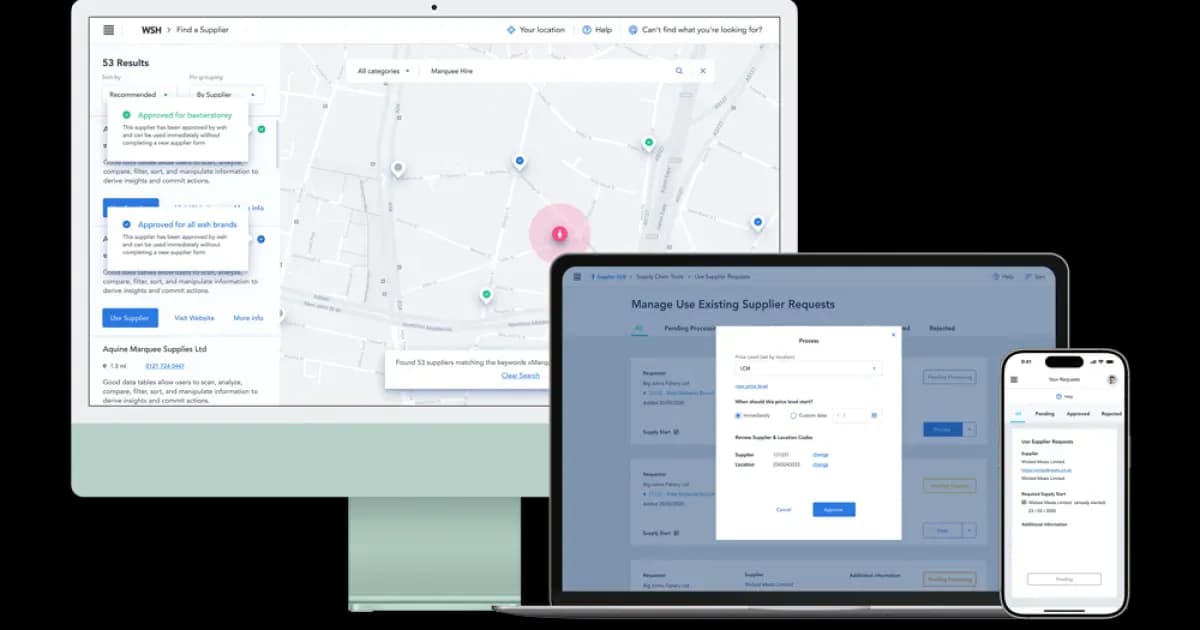
WSH Supplier Search & Procurement Portal
Hundreds of approved suppliers on a searchable map, with single sign-on and a request-and-approval workflow.
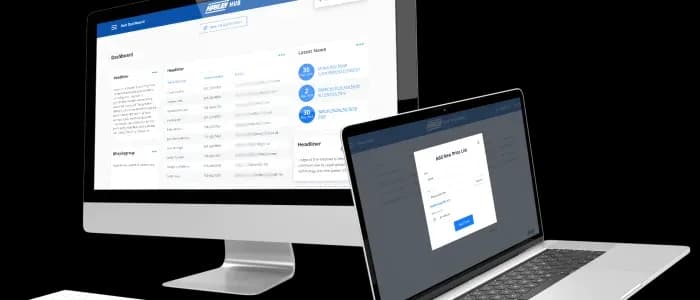
Hayley Hub & Pricing Engine
Middleware giving one secure login across company applications, plus a pricing engine that builds the import spreadsheets by itself.
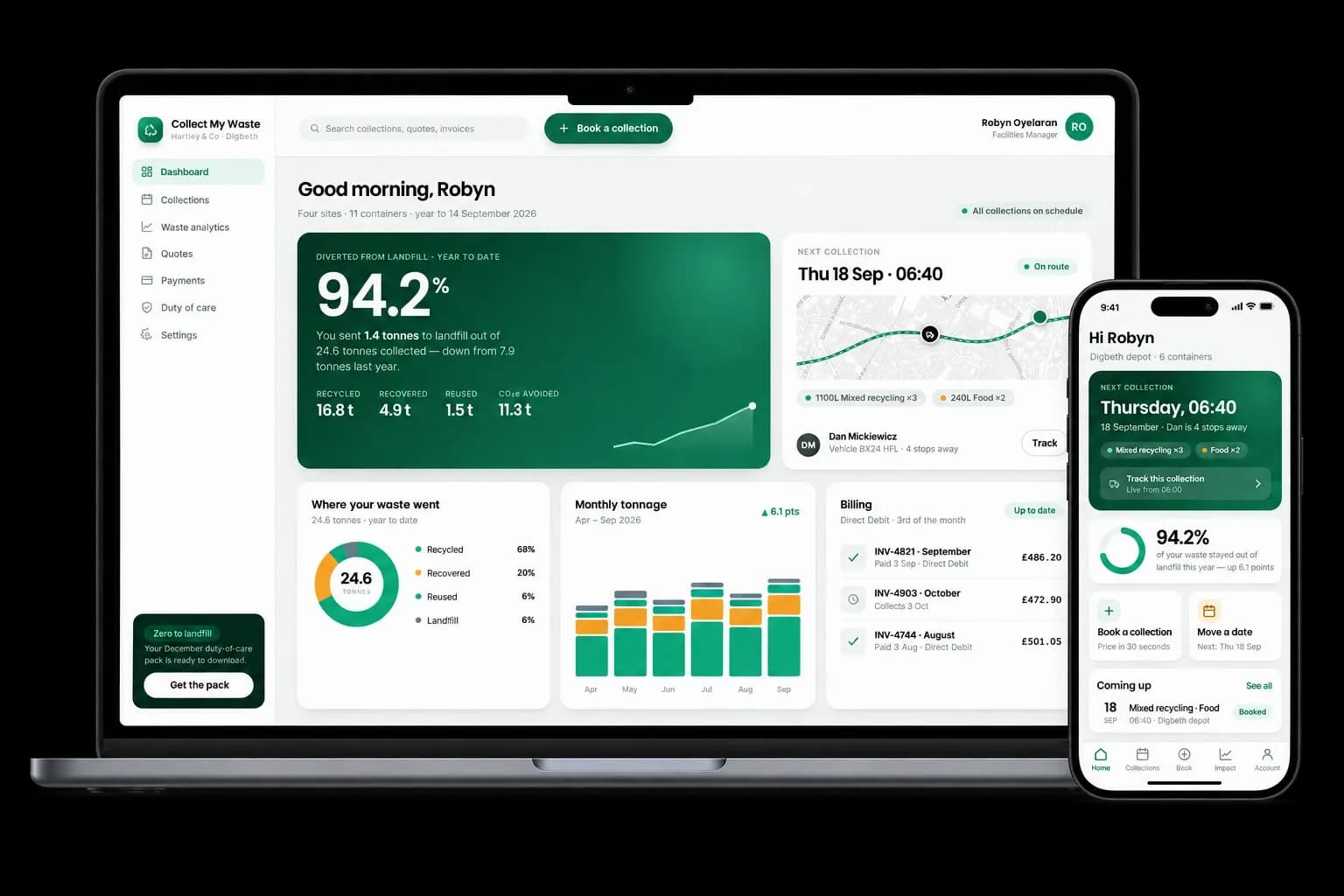
Collect My Waste App & Website
Account-based booking for waste collections and skip hire, with quotes, payments and waste-type analytics.
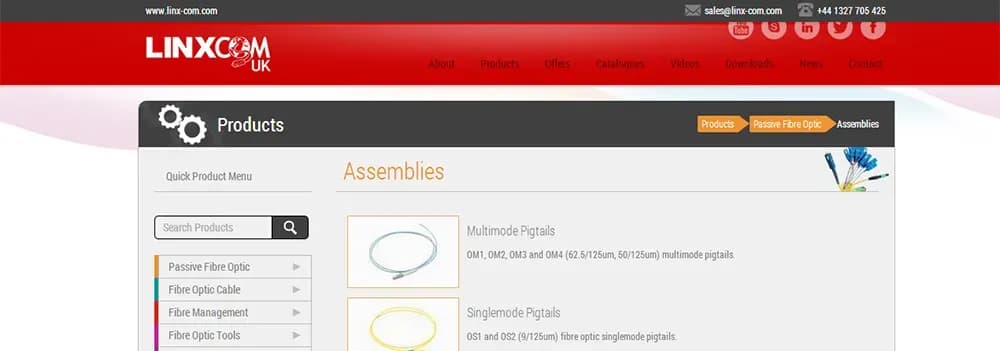
Linx-com Online Catalogue
Several hundred products made findable through search and category filters, with automatic image watermarking.
What AI for logistics is actually good at
A deliberately unglamorous answer: reading paperwork, finding things and flagging what has gone wrong. That is where the admin time goes, so that is where we would start.

Reading the paperwork so people do not have to
Supply chains generate documents: purchase orders, delivery notes, supplier price lists, invoices, certificates. Most arrive as PDFs or spreadsheets in a format that varies by supplier, and most are retyped by a person into a system that needs the numbers.
Language models are genuinely good at this narrow job. A model can read a supplier's price list or an invoice, pull out the fields you care about and hand them over as structured data, with a confidence score and a human check on anything it is unsure about. The gain is administrative rather than strategic — fewer hours on data entry, and fewer typos reaching the ERP.
The same applies to exceptions. When a late delivery, a short shipment or an off-contract price needs chasing, a model can group the cases, summarise what happened and draft the email, leaving the decision with a person. Our AI automation page covers how we scope that kind of work.

Search, supplier matching and forecasting support
The other place AI earns its keep is in finding things. "Who can supply this, near this depot, at this accreditation level?" is a matching problem that keyword search handles badly and semantic search handles well — and the same is true of a customer describing a part rather than naming it in a catalogue of several thousand lines.
Forecasting deserves more caution than it usually gets. We will not claim a model predicts your demand better than your planners do. What software can do is assemble the history, present it clearly, flag the lines behaving unusually and leave a planner applying judgement to a shortlist instead of a spreadsheet. That is the honest version of AI-assisted planning, and it is the version we build.
Where an assistant answers questions over your own records, we ground it in those records rather than letting it improvise, and we keep a person in the loop on anything that commits money or moves a schedule. See AI integration and AI consultancy for how we get there.
Rapid results with VelocitySprint®
Pay for output, not hours.
Our VelocitySprint® process accelerates your app development. Each deliverable is scoped, tracked and quality-checked in OutputUnit® units — a unit of finished work rather than time spent. You see progress daily, and Escape Hatch Friday™ means you are never locked into a sprint that stopped making sense on Tuesday.
Discovery & scoping
Focused workshops define the essential features of your MVP. You'll leave with clarity on scope, timeline and budget, without delays.
Sprint-based builds
Our UK developers work in short, high-speed sprints to deliver working prototypes quickly. You'll see progress fast, with daily updates.
Launch & validate — fast
Get your MVP live in weeks, not months. Test with real users, gather feedback and pivot rapidly, so your idea starts delivering value sooner.
What Our Clients Say
Scorchsoft helped us take our idea for an app and make it a reality. Everything from the planning meeting to decide what we really needed to the project management and execution was great. It was delivered on time - early in fact - and on budget. Highly recommend.
 Rebecca PalserDragonfly Intelligence
Scorchsoft is a brilliant company with fantastic knowledge of the mobile app industry. From the project management to the development team, they have been the perfect candidate for our project, and we can't thank them enough!
 Lance ChorltonGapped Online
We're really pleased with the work Scorchsoft has done in developing our web portal! They have been accurate with timelines and budget, delivering a solid product that allows us to monitor and manage patients remotely while they use our novel medical device at-home. The "plan - design - build" approach has worked well and saved us time in the long-run by catching requirements and issues early.
 Daniel GreenSensTrain
I'm really pleased with how my app came out, it was exactly what I was looking for. The team at Scorchsoft are great at what they do and made the whole process as simple and easy as possible. Being someone who is not very tech savvy the set up and back end operations were done in a great easy to use manner even for myself which makes using my app stress free. Thanks to all the team!
 Ruben CarrollMosaic Masterpieces
The new Flourish Education website has already removed a lot of manual processes, freeing up both schools, candidates and internal employees time. We are delighted with the look and feel which is clean, professional and more engaging. We are also pleased with the decision to have an HD video background on the homepage, and building immediate trust with our clients by giving them a taste of what it looks like in the Flourish Education offices.
James HancocksMarketing Manager, Flourish Education I can't believe how quickly we started to see results with this project. Scorchsoft provided us with graphic-designed mockups of how the app would look once built, and we were able to sell the product for use by our first customer before the product was finished. Since launching in March, we have secured a major television network as a client who now uses Image Approvals to manage the talent approval process for their productions.
Aimee SpinksMD, ImageApprovals.com
Tell us where the spreadsheet is
If one file, one inbox or one person is holding your supply chain together, that is usually the right place to start. Half an hour is normally enough to work out whether software would help and what it would take.
Logistics software questions we are asked most
Straight answers on scope, integration, cost and where AI fits.
Logistics software is anything that plans, records or exposes the movement of goods, the suppliers behind them and the paperwork around them — from warehouse and transport systems to supplier portals, booking tools and pricing engines. Off-the-shelf products cover the common ground well, so custom software earns its place at the edges: the process that is specific to how you trade, the integration between two systems that were never meant to meet, or the portal your customers and suppliers actually use. If a package fits, buy the package. We are usually called in for the part no package covers.
It makes the approved list the easiest route rather than the slowest one. A portal lets a buyer search suppliers by location, category and whatever criteria you approve on, submit a request against a real workflow, and exchange documents in a place that keeps a record. For Westbury Street Holdings we put hundreds of approved suppliers on a searchable map and signed existing staff in through the login they already had, so there was no new account to create. Read more on our portal development page.
Usually, yes — the method depends on what the system exposes. A modern API is straightforward; an older system may mean scheduled file exchange, a database view or a middleware layer that presents one consistent interface to everything built afterwards. That middleware pattern is what we built for Hayley Group, where a hub sits between existing and new applications. See system integration for how we approach it.
Start with the spreadsheet that has the most people waiting on it. Price list rebuilds, stock reconciliations and booking diaries are the usual candidates, because they are well understood, repeat constantly and fail in visible ways. Moving one of those into an application gives you a shared record, an audit trail and a set of rules that do not depend on who is in the office. Our spreadsheet to app page describes the process.
A focused first release — one portal, one integration, one replaced process — typically lands in a matter of weeks rather than months, and we work in short sprints so you see it running early rather than at the end. Larger programmes get broken into releases that each stand on their own. If you want to test the idea before committing to a build, app idea validation and rapid MVP development are the lighter-weight routes in.
Cost follows scope: the number of systems to integrate with, how much of your process the software has to model, and how many kinds of user need their own view of it. A single well-defined portal or integration is a far smaller commitment than a platform covering an entire operation. We publish a detailed breakdown in our guide to how much it costs to build an app, and we will give you a written estimate before any work starts.
It is, provided you point it at admin rather than at strategy. Extracting fields from supplier documents, searching a large catalogue by description, summarising exceptions and drafting the follow-up are all jobs where current models are reliable enough to save real hours. Demand prediction and network optimisation are much harder to do well and much easier to overclaim, so we would rather build the boring parts first and prove the value before going near them.
You do. We hand over the source code and the intellectual property for the work we build for you, and your data stays yours throughout. We can host and support the system afterwards or hand it to your own team — that is a commercial choice, not a lock-in. Our process page sets out how a project runs from first conversation to handover.
Need help building your ideas?
Tell us where you're headed and we'll come back with our thoughts, a realistic plan and a rough cost estimate. Scorchsoft is a UK-based team of app, portal and AI developers, working in-house from Birmingham's Jewellery Quarter.