
Fleet & Vehicle Telematics Development
Telematics platforms, driver and engineer apps, job and route scheduling, and the data pipelines that turn a fleet's raw signal into something an operations manager can act on. For fleet operators, telematics providers and automotive businesses.

A fleet produces more data than anyone reads
Most operators are not short of telematics data. They are short of a way to use it. The tracking box reports every few seconds, the tachograph system holds compliance records, the maintenance schedule lives somewhere else entirely, and the person who has to decide whether a vehicle goes out tomorrow reconciles all three by hand.
The jobs we get asked to do in this sector:
- Make one screen out of several systems. Telematics provider, fuel card, maintenance system, job scheduler and driver rota rarely share a customer record, let alone a vehicle one. The integration is the project.
- Put the job in the driver's hand. A phone or in-cab app that works with no signal, captures proof of delivery or completion, and syncs when it can. Offline is the requirement everyone underestimates.
- Turn signal into exceptions. Nobody watches a live map all day. What they need is to be told which five vehicles are the problem this morning and why — idling, harsh braking, a missed service interval, a route running late.
- Own the platform rather than rent it. Operators at scale reach a point where per-vehicle, per-month across a large fleet costs more than building the parts that actually matter to them, and the off-the-shelf product still will not do the one thing their business runs on.
A note on what is published here. A good deal of our connected-vehicle and telematics work sits under NDA and does not appear on this site. The case studies below are the ones we can show: real-time vehicle telemetry and location, and collection-fleet scheduling. If you want to talk about the rest, book a call and we can be more specific in private than in public.
What we build for fleet and automotive operators
The pieces most fleet and telematics projects are assembled from. Each one links to how we approach it.
Vehicle and fleet work we can show
Three projects covering real-time vehicle telemetry, collection-fleet scheduling and the middleware that joins a supplier's systems together.
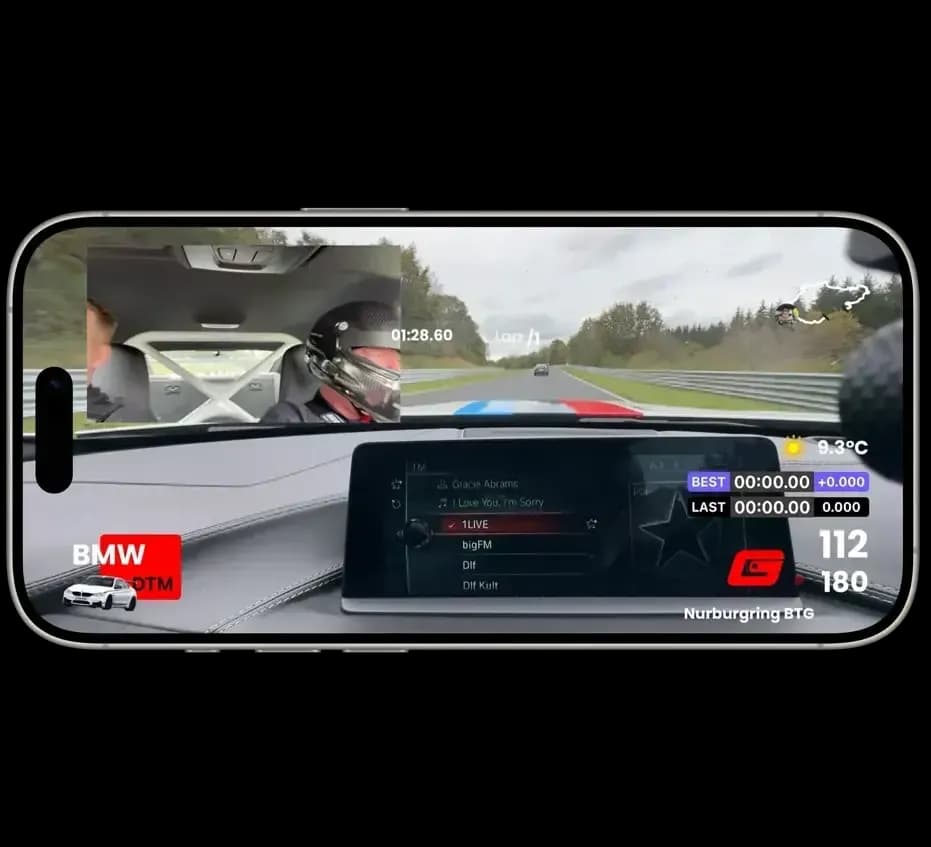
Gapped Online
A motorsport app with dual-camera live streaming, personalised vehicle profiles, real-time lap tracking and leaderboards — vehicle telemetry captured and published live from the car.
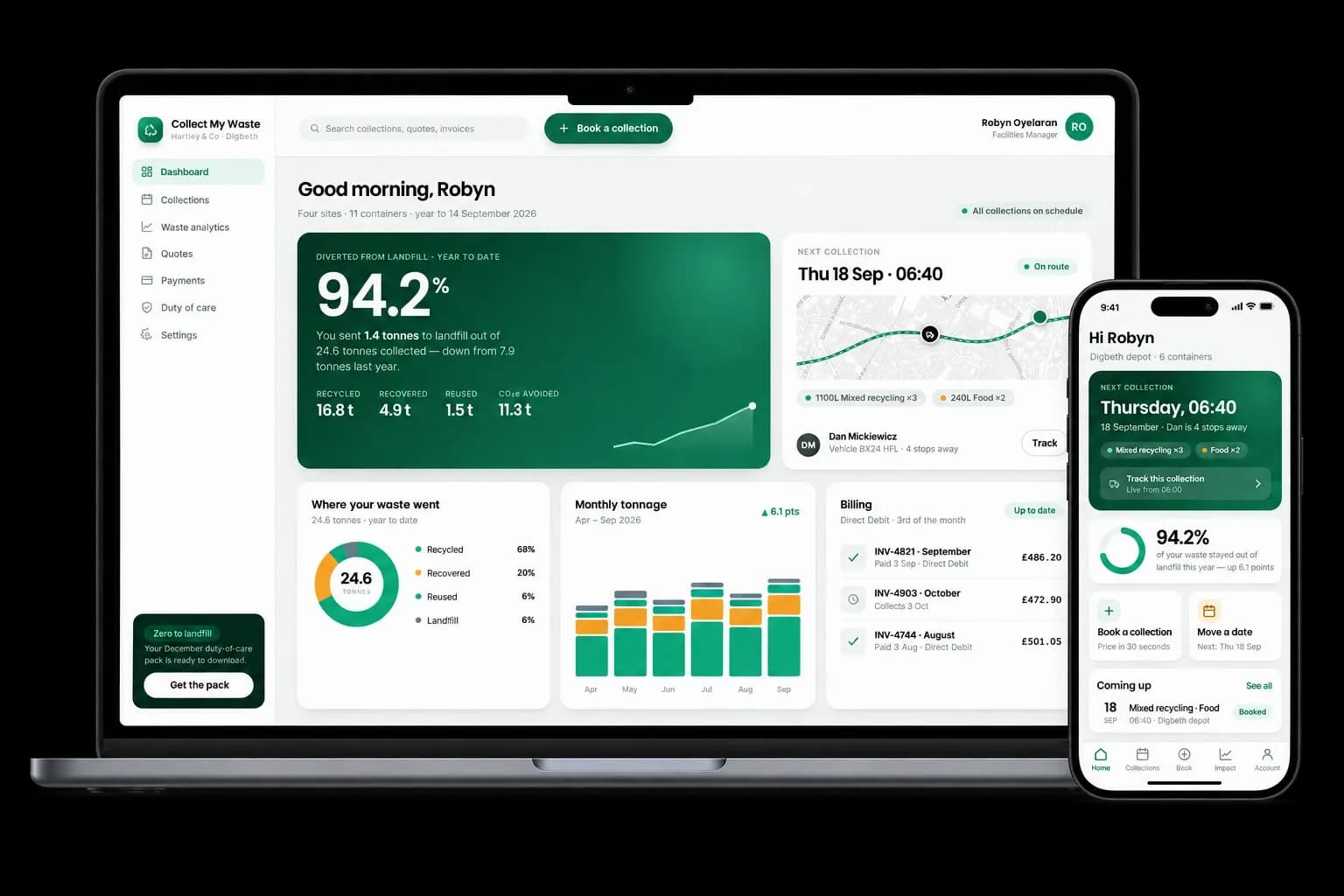
Collect My Waste
A collections platform with instant self-serve quoting, booking against collection rounds, card and Direct Debit payment, and reporting on where every tonne ended up.
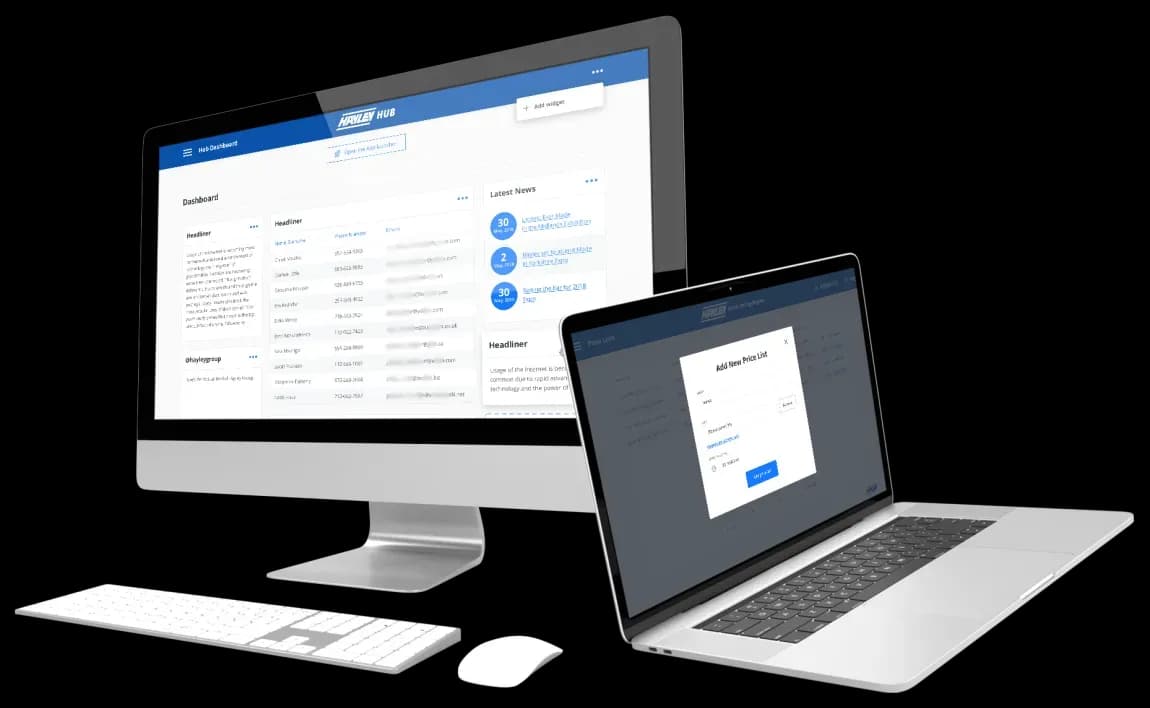
Hayley Hub
Middleware and single sign-on across a UK engineering supplier's applications, plus a pricing engine that automates price list updates for parts and consumables.
Telematics is a data problem wearing a vehicle costume
A mid-sized fleet generates millions of position, speed and diagnostic events a month. Kept in the telematics vendor's portal, that data answers the vendor's questions. Kept in your own store, it answers yours — cost per mile by route, which depot's driving behaviour is actually improving, whether the new vehicles are earning their lease.
That is the work we do most often here: land the raw feed somewhere queryable, model it against your own job, customer and maintenance records, and put a dashboard on top that shows exceptions rather than everything. Our data lake development and AWS data engineering pages cover the approach, and Lake On Rails is our product for getting there faster.
Once that exists, AI becomes worth discussing: predicting which vehicles are heading for an unplanned failure, flagging anomalous fuel or mileage claims, or letting a depot manager ask a plain-English question of the fleet instead of exporting a spreadsheet. Before it exists, an AI project in this sector is usually premature — and we will say so.
Rapid results with VelocitySprint®
Pay for output, not hours.
Our VelocitySprint® process accelerates your app development. Each deliverable is scoped, tracked and quality-checked in OutputUnit® units — a unit of finished work rather than time spent. You see progress daily, and Escape Hatch Friday™ means you are never locked into a sprint that stopped making sense on Tuesday.
Discovery & scoping
Focused workshops define the essential features of your MVP. You'll leave with clarity on scope, timeline and budget, without delays.
Sprint-based builds
Our UK developers work in short, high-speed sprints to deliver working prototypes quickly. You'll see progress fast, with daily updates.
Launch & validate — fast
Get your MVP live in weeks, not months. Test with real users, gather feedback and pivot rapidly, so your idea starts delivering value sooner.
Building for teams across healthcare, logistics, motorsport and manufacturing
Trusted by 220+ organisations




What Our Clients Say
Scorchsoft helped us take our idea for an app and make it a reality. Everything from the planning meeting to decide what we really needed to the project management and execution was great. It was delivered on time - early in fact - and on budget. Highly recommend.
 Rebecca PalserDragonfly Intelligence
Scorchsoft is a brilliant company with fantastic knowledge of the mobile app industry. From the project management to the development team, they have been the perfect candidate for our project, and we can't thank them enough!
 Lance ChorltonGapped Online
We're really pleased with the work Scorchsoft has done in developing our web portal! They have been accurate with timelines and budget, delivering a solid product that allows us to monitor and manage patients remotely while they use our novel medical device at-home. The "plan - design - build" approach has worked well and saved us time in the long-run by catching requirements and issues early.
 Daniel GreenSensTrain
I'm really pleased with how my app came out, it was exactly what I was looking for. The team at Scorchsoft are great at what they do and made the whole process as simple and easy as possible. Being someone who is not very tech savvy the set up and back end operations were done in a great easy to use manner even for myself which makes using my app stress free. Thanks to all the team!
 Ruben CarrollMosaic Masterpieces
The new Flourish Education website has already removed a lot of manual processes, freeing up both schools, candidates and internal employees time. We are delighted with the look and feel which is clean, professional and more engaging. We are also pleased with the decision to have an HD video background on the homepage, and building immediate trust with our clients by giving them a taste of what it looks like in the Flourish Education offices.
James HancocksMarketing Manager, Flourish Education I can't believe how quickly we started to see results with this project. Scorchsoft provided us with graphic-designed mockups of how the app would look once built, and we were able to sell the product for use by our first customer before the product was finished. Since launching in March, we have secured a major television network as a client who now uses Image Approvals to manage the talent approval process for their productions.
Aimee SpinksMD, ImageApprovals.com
Got a fleet, telematics or vehicle data project?
Tell us which systems you run today and what your operations team currently does by hand. We will tell you what is worth building, roughly what it would cost, and what to do first.
Fleet and telematics software questions
What operators, telematics providers and automotive businesses ask us most often.
Usually, yes. Most telematics platforms expose an API or a data feed, and where they do we can pull position, trip, diagnostic and driver-behaviour data into a system you control. Where a provider is deliberately closed, that is worth knowing early — it is a commercial constraint rather than a technical one, and it changes what your options are. We will check before the project starts rather than after.
Rarely, and we would usually advise against it as a first move. The hardware and the tracking platform are typically the part that works. What is missing is the layer above it: your jobs, your customers, your maintenance schedule and your commercial rules joined to that feed. Building that layer is cheaper, faster and far less disruptive than ripping out working boxes.
It has to, and we build for that. A driver app that assumes connectivity fails in exactly the places drivers work — loading bays, rural routes, underground car parks. The pattern we use is local-first: the app holds the job, captures the evidence, and syncs when a connection returns, with conflict handling for the cases where something changed while it was offline.
Yes, and it is a real consideration rather than a formality. Vehicle tracking data about a named driver is personal data, and there are consultation and transparency obligations attached to monitoring staff. We build the access controls, retention rules and audit trails to support whatever policy you and your advisers settle on — we are software developers rather than your legal adviser, but we will make sure the system can implement the policy.
More than this page shows. A meaningful part of our connected-vehicle work sits under NDA and cannot be published, which is why the case studies here are the ones covering vehicle telemetry, tracking and fleet scheduling. On a call we can be considerably more specific about relevant experience than we can on a public web page.
Almost always. The usual first step is one exception report or one driver workflow, live in a few weeks through our VelocitySprint® process, running beside what you already have. It proves the data joins up before anyone commits to a platform budget, and it is the version that tends to survive contact with the depot.
Need help building your ideas?
Tell us where you're headed and we'll come back with our thoughts, a realistic plan and a rough cost estimate. Scorchsoft is a UK-based team of app, portal and AI developers, working in-house from Birmingham's Jewellery Quarter.